
Let’s keep it real.
Most guys only start caring about their hair when the shower drain looks like a small animal or when the barber quietly asks, “So… how long have you been noticing the corners pulling back?”
But here’s the thing: the men you see with thick, shiny, effortless hair aren’t lucky. They just follow a handful of simple rules every day.
The even better news? You don’t need a 15-step routine, $200 products, or a personal stylist. Just seven smart habits that take less than five extra minutes a day.
Whether you keep it faded, you’re growing it out, you have tight coils, loose waves, or you’re fighting early thinning – these tips work. Let’s get into them.
Introduction: Why Hair Care Matters for Men
Society used to tell guys that caring about your hair made you “high maintenance.” That mindset is dead in 2026.
Good hair is now one of the highest-ROI grooming investments you can make. It instantly makes you look younger, healthier, and more put-together.
It also protects your hair long-term. The small habits you build today decide whether you still have a full head of hair at 40 or you’re shopping for the most natural-looking hair system.
Healthy hair starts with knowledge. Let’s fix that right now.
1. Use the Right Shampoo & Conditioner
Using the wrong shampoo is the #1 silent killer of men’s hair.
Think of it like skincare: you wouldn’t use dish soap on your face. Same rule applies to your scalp.
Choose Products Based on Hair Type
Every man falls into one of these categories. Pick the matching formula:
- Thin or thinning hair → Volumizing or thickening shampoos with biotin, caffeine, or niacinamide
- Oily scalp → Clarifying shampoos with tea tree, peppermint, or charcoal
- Dry, flaky, or dandruff-prone → Medicated or hydrating formulas with ketoconazole, zinc pyrithione, or salicylic acid
- Curly, coily, or Afro-textured → Creamy, moisturizing, sulfate-free cleansers or co-wash products
- Normal hair → Daily strengthening or balancing shampoo
Quick test: after washing, if your hair feels squeaky-clean and almost straw-like, the shampoo is too harsh.
Avoid Harsh Sulfates & Chemicals
Sulfates (SLS/SLES) create mountains of foam but strip your scalp’s natural sebum. Your scalp then panics and produces even more oil – hello, greasy hair by 3 p.m.
Parabens and silicones that don’t rinse out fully can also build up and suffocate follicles over time.
Switch to sulfate-free, clean formulas. Within 2-3 weeks you’ll notice softer hair, less frizz, and a healthier scalp.
Pro move: use conditioner every single time you shampoo – even if you think you don’t need it. It closes the cuticle, locks in moisture, and makes styling ten times easier.
2. Don’t Overwash Your Hair
Washing your hair every day is the fastest way to destroy it.
Daily shampooing removes the natural oils that keep your hair strong, shiny, and protected.
Ideal Washing Frequency for Men
- Straight or fine hair: Every 2–3 days
- Wavy or thick hair: 2–3 times per week
- Curly hair (3A–3C): 1–2 times per week
- Coily or 4A–4C hair: Once per week or every 10 days (co-wash in between)
- Heavy gym schedule: Rinse with lukewarm water and condition only – skip shampoo most days
Your scalp will take about 4–6 weeks to adjust. Yes, you might feel slightly greasy at first. Push through it. After the transition period, your hair produces less oil naturally and looks better than ever.
3. Nourish Hair With Natural Oils
Your scalp produces sebum for a reason – it’s nature’s perfect conditioner.
Adding the right natural oils boosts that protection and feeds the follicle directly.
Coconut, Argan & Jojoba Benefits
- Coconut oil: Penetrates the hair shaft, reduces protein loss, and fights fungal issues
- Argan oil: Packed with vitamin E and fatty acids; adds insane shine and controls frizz
- Jojoba oil: Closest match to human sebum; balances oily or dry scalps perfectly
- Castor oil (especially Jamaican black castor oil): One of the best hair growth tips for black men – increases blood flow when massaged in
How to apply without looking greasy:
Warm 3–6 drops in your palms, rub together, then lightly scrunch into damp hair from mid-lengths to ends. For scalp health, massage a few drops in 30 minutes before washing.
4. Protect Your Hair From Heat Damage
Heat tools are the silent reason so many guys have rough, dull, unmanageable hair by 30.
Every blast of 400°F damages the keratin structure permanently.
Use Heat Protectant Before Styling
Never blow-dry or flat-iron without a heat protectant spray or cream. Look for ingredients like dimethicone, cyclomethicone, or natural alternatives like hydrolyzed quinoa.
Better yet – embrace air drying 80% of the time. After showering:
- Gently squeeze out water with a microfiber towel or cotton t-shirt
- Apply leave-in conditioner or lightweight oil
- Let it dry naturally or use the cool setting on your dryer
Your hair will feel softer and look shinier within a week.
5. Improve Your Diet for Hair Strength
Hair is dead protein. If you don’t feed it the right building blocks, it grows in weak, thin, and slow.
Protein, Vitamins & Hydration
- Protein: Aim for 0.8–1.2g per pound of body weight (eggs, chicken, fish, Greek yogurt, lentils)
- Biotin & B-vitamins: Eggs, almonds, sweet potatoes, salmon
- Iron & ferritin: Red meat, spinach, lentils (low levels are linked to male pattern hair loss)
- Zinc: Pumpkin seeds, oysters, beef
- Omega-3: Salmon, sardines, walnuts, chia seeds
- Vitamin D: Sunlight + fatty fish or supplement if deficient
- Water: 3–4 liters daily minimum
Real-life example: Add two eggs + a handful of almonds + one salmon meal per week and you’ll see visibly thicker hair in 8–12 weeks.
6. Trim Regularly to Maintain Healthy Ends
Skipping trims to “grow it longer” is the biggest myth in men’s hair.
Split ends don’t stop – they travel upward and make your hair look thinner and more damaged.
How Often Should Men Trim?
- Buzz cut / fade / crop: Every 3–4 weeks to keep lines sharp
- Short textured cut: Every 5–6 weeks
- Medium length (think Chris Hemsworth): Every 7–8 weeks
- Long hair past shoulders: Every 10–12 weeks (just a light dusting)
Tell your barber: “Take off whatever is damaged, but keep the length.” They’ll remove 5–10 mm and your hair instantly looks twice as thick.
7. Adopt a Gentle Grooming Routine
How you treat your hair in the first five minutes after the shower determines 80% of its daily health.
Avoid Rough Towel Drying
Rubbing your hair with a regular towel creates massive friction and breakage.
Switch to gently pressing or wrapping with a microfiber towel or clean cotton t-shirt. You’ll notice way less frizz and fewer flyaways immediately.
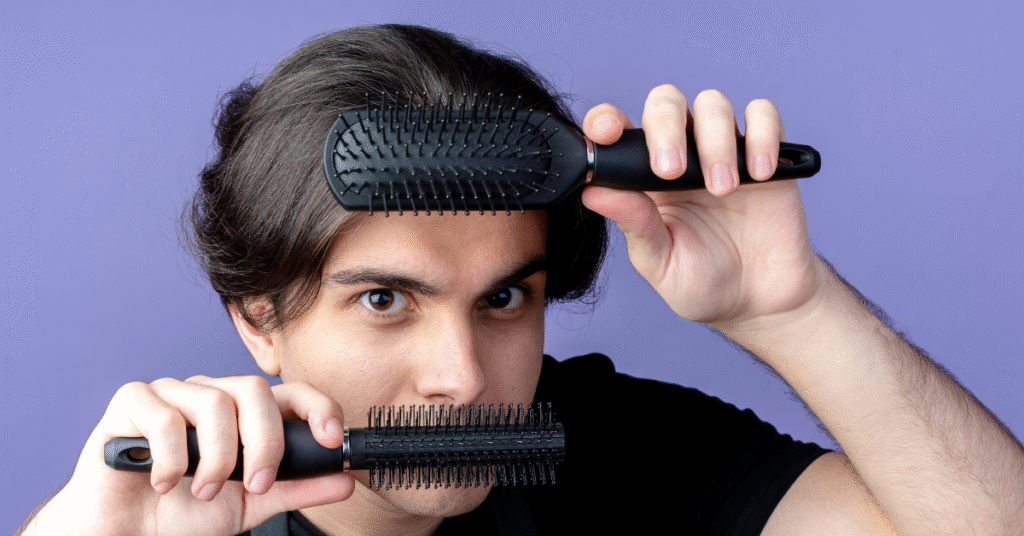
Choose the Right Comb or Brush for Your Hair
- Curly or coily hair → Wide-tooth comb or fingers only (start from ends, never roots)
- Wavy or straight hair → Boar bristle brush to distribute natural oils
- Wet hair → Never use fine-tooth combs or plastic brushes
Bonus nightly routine: Spend 60 seconds massaging your scalp with your fingertips. It increases blood flow and helps nutrients reach the follicles faster.
Conclusion: Build Your Daily Hair Care Routine That Actually Sticks
Here’s your dead-simple starter routine you can begin tomorrow:
Morning:
- Rinse with lukewarm water (shampoo only 2–3 times per week)
- Apply conditioner or leave-in
- Gently microfiber dry
- 3 drops of argan/jojoba oil on ends
- Style with fingers or wide-tooth comb
Night (2–3 times per week):
- 2-minute scalp massage
- Optional: lightweight oil on dry scalp
That’s it. Five extra minutes that will completely transform your hair in 30–90 days.
Start with just two or three of these seven tips today. Once they become automatic, layer in the rest.
Your hair is one of the few things that literally grows with you every single day. Treat it right and it will reward you for decades.
Which of these seven hair care tips for men are you starting first? Drop it in the comments – let’s keep each other accountable.