
Staring at the mirror and noticing your hair looks flat, lifeless, and thinner than usual? You’re not alone.
Millions of men deal with thin hair that refuses to cooperate, no matter how much product they use or how carefully they style it. The good news? Adding volume to thin hair doesn’t require expensive treatments or complicated routines.
With the right techniques, products, and daily habits, you can transform flat, thin hair into a fuller, more confident look. This guide covers everything from the science of hair volume to practical styling tricks you can start using today.
Whether you were born with fine hair or you’ve noticed gradual thinning over time, these proven strategies will help you maximize every strand and create the appearance of thicker, healthier hair.
What Is Hair Volume & Why It Matters for Thin Hair Men
Hair volume refers to how full, thick, and lifted your hair appears. It’s determined by multiple factors working together: the number of hair strands on your scalp, the thickness of each individual strand, how your hair is positioned, and its overall health.
When men talk about wanting more volume, they’re usually describing hair that stands up from the scalp rather than lying flat against it. Volume creates the visual illusion of more hair, even if the actual number of strands hasn’t changed.
For men with thin hair, volume is especially important because it helps cover the scalp and creates a fuller appearance that boosts confidence.
How Hair Thickness Affects Volume
Hair thickness and hair volume are related but different concepts. Thickness refers to the diameter of each individual hair strand, while volume relates to how full your overall hair looks.
Men with thick hair strands naturally have an easier time achieving volume because each strand takes up more space and stands away from the scalp more easily.
Fine hair, on the other hand, has thinner individual strands that tend to lie flat and clump together. This makes creating volume more challenging but definitely not impossible.
Understanding your hair thickness helps you choose the right products and techniques. Fine hair needs lightweight formulas that won’t weigh it down, while thicker hair can handle heavier products.
Signs Your Hair Is Lacking Volume
How do you know if your hair lacks volume? There are several telltale signs to watch for.
Your scalp becomes more visible, especially under bright lighting or when your hair is wet. Hair lies completely flat against your head with no natural lift at the roots.
Hairstyles that used to work no longer hold their shape throughout the day. Your hair feels limp and lifeless, lacking any natural bounce or movement.
You notice your hair looks greasier faster than it used to, as oils from your scalp travel down thin strands more quickly. These signs indicate that your hair needs targeted volume-boosting strategies.
Why Thin Hair Needs Special Care
Thin hair is more vulnerable to damage, breakage, and the appearance of hair loss. Each strand carries more visual weight because there are fewer strands overall to create fullness.
This means that proper care isn’t just about aesthetics but about protecting the hair you have. Harsh treatments, heavy products, and aggressive styling can make thin hair look even thinner by causing breakage or weighing it down.
Thin hair also shows damage more obviously than thick hair. Split ends, dryness, and breakage are more noticeable and can significantly impact your overall look.
That’s why men with thin hair benefit from gentler, more strategic approaches to washing, conditioning, and styling.
Know Your Hair Type Before Adding Volume
Understanding your specific hair type is the foundation of successfully adding volume. Not all thin hair is the same, and what works for one person might not work for another.
Identifying Fine, Thin, and Limp Hair
Fine hair refers to the diameter of each individual strand. If you have fine hair, each strand is narrow and delicate, which often makes it softer and more prone to breakage.
Thin hair, on the other hand, describes the density of hair on your scalp. You might have thick individual strands but thin overall coverage, or fine strands with good density.
Limp hair is hair that lacks natural body and falls flat regardless of thickness or density. Understanding these distinctions helps you target the right solutions.
To test your hair, take a single strand between your fingers. If you can barely feel it, you have fine hair. Look at your scalp in good lighting to assess density and coverage for determining thin hair.
How Hair Texture Impacts Volume
Hair texture plays a major role in how easily you can achieve volume. Straight hair tends to lie flatter against the scalp, making volume more challenging to create and maintain.
Wavy hair has natural bends that create some automatic lift and movement, giving you a head start on volume.
Curly hair naturally has the most volume because the curl pattern lifts hair away from the scalp. However, curly hair can still appear thin if there aren’t enough strands or if the curls are weighed down.
Each texture requires slightly different approaches to maximize volume while working with your hair’s natural tendencies.
Volume Techniques for Straight, Wavy, and Curly Hair
Men with straight hair should focus on root lift and using products that add texture and grip. Blow drying in the opposite direction of your natural growth pattern creates instant lift.
For wavy hair, enhance your natural texture with sea salt spray and avoid over-brushing, which can flatten waves. Let your hair air dry partially before styling to maintain natural volume.
Curly-haired men should use lightweight, curl-enhancing products that define curls without weighing them down. Avoid heavy oils and creams at the roots, applying them only to the mid-lengths and ends instead.
How to Add Volume to Thin Hair Men (Complete Step-by-Step Guide)
Creating volume in thin hair requires a systematic approach that starts in the shower and continues through your entire styling routine.
Wash and Condition the Right Way
The way you wash your hair sets the foundation for volume. Start by thoroughly wetting your hair with lukewarm water, as hot water can strip natural oils and leave hair limp.
Apply a volumizing shampoo primarily to your scalp, where oil and buildup accumulate. Massage gently with your fingertips using circular motions to stimulate blood flow and remove buildup.
Rinse completely, as leftover shampoo residue can weigh hair down. When conditioning, apply only to the mid-lengths and ends, never the roots or scalp area.
Conditioning the roots weighs down the area where you need the most lift. Rinse with cool water to seal the hair cuticle and add shine.
Correct Product Application for Maximum Lift
Product application technique matters as much as the products themselves. Always start with slightly damp, towel-dried hair rather than soaking wet or completely dry hair.
Apply volumizing products at the roots first, where you need the most lift. Use your fingers to work product through hair, lifting sections away from your scalp as you go.
Avoid using too much product, which is one of the biggest mistakes men make. Start with a small amount and add more only if needed.
Distribute products evenly by running your fingers through your hair in different directions. This prevents clumping and ensures every strand gets coated for maximum volume effect.
Daily Routine for Naturally Fuller Hair
Establishing a consistent daily routine helps maintain volume throughout the day and trains your hair over time. Morning styling should take no more than 5-10 minutes once you develop your system.
Start by applying a pre-styler like sea salt spray or volumizing foam to damp hair. Blow dry using your fingers or a brush to direct hair upward and away from your scalp.
Finish with a light-hold styling product for texture and hold without weighing hair down. Throughout the day, refresh volume by running your fingers through your hair and lifting at the roots.
Before bed, consider using a silk pillowcase, which creates less friction than cotton and helps maintain your style and hair health.
Best Hair Washing Routine for Adding Volume
Your washing routine has a bigger impact on hair volume than you might realize. Getting this step right makes everything else easier.
How Often Should Men Wash Thin Hair?
The ideal washing frequency for thin hair is typically every other day or every two days. This schedule removes oil and buildup that flatten hair while allowing your scalp to maintain healthy oil production.
Washing daily can strip too much oil, causing your scalp to overproduce oil in response, which actually makes hair look greasier faster.
However, if you exercise intensely or have a very oily scalp, daily washing with a gentle, volumizing shampoo is fine. Pay attention to how your hair responds and adjust accordingly.
If your hair looks flat and greasy by the end of day one, you might need to wash more frequently. If it feels dry and brittle, reduce washing frequency.
Why Overwashing Kills Volume
Overwashing removes the natural oils that protect your hair and scalp. When you strip these oils too frequently, your hair becomes dry, brittle, and more prone to breakage.
Paradoxically, overwashing can also lead to increased oil production as your scalp tries to compensate for the constant removal of natural oils.
This creates a cycle where your hair gets oily faster, tempting you to wash even more frequently. Dry, damaged hair also lies flatter and has less natural body and bounce.
The hair cuticle becomes rough and damaged with excessive washing, making strands more likely to tangle and clump together rather than stand separately for maximum volume.
Using Volumizing Shampoo & Lightweight Conditioner
Volumizing shampoos are specifically formulated to cleanse without weighing hair down. They often contain ingredients like biotin, rice protein, and polymers that coat each strand to make it appear thicker.
These shampoos remove oil and buildup more effectively than regular shampoos, giving your hair the clean slate it needs for volume. Look for shampoos labeled as volumizing, thickening, or designed for fine hair.
Pair your volumizing shampoo with a lightweight conditioner that moisturizes without heavy oils or silicones. Apply conditioner only from mid-length to ends, never at the roots.
If your hair is very fine or thin, consider using conditioner only every other wash or using a leave-in conditioner spray instead of traditional cream conditioner.
Best Products to Add Volume to Thin Hair Men
The right products can make a dramatic difference in how much volume you achieve and how long it lasts throughout the day.
Sea Salt Spray for Natural Lift
Sea salt spray is one of the most effective products for adding volume to thin hair. It works by adding texture and grip to each strand, helping hair stand away from the scalp.
Apply sea salt spray to damp hair before styling. The salt crystals create separation between strands and add a slightly rough texture that holds volume better.
This product is especially effective for men with straight or wavy hair who struggle with hair that falls flat. It creates a beachy, textured look with natural movement.
For best results, spray from roots to ends, scrunch with your hands, and then style as usual. The texture created by sea salt spray also helps other styling products work more effectively.
Thickening Creams and Lightweight Pastes
Thickening creams and lightweight pastes provide hold and texture without the weight of traditional styling products. These products coat each hair strand to make it appear thicker while providing flexible hold.
Apply a small amount to damp hair, focusing on roots and working through to ends. These products work well for creating structured styles that need to hold throughout the day.
Look for formulas labeled as lightweight, texturizing, or designed for fine hair. Avoid heavy waxes, pomades, or gels that can make thin hair look stringy and separated.
The key is finding products that provide enough hold to maintain volume without making your hair feel crunchy, stiff, or weighed down.
Texture Powder for Instant Volume Boost
Texture powder, also called volumizing powder, is a game-changer for men with thin hair. This dry powder is applied directly to roots of dry hair for an instant volume boost.
Sprinkle a small amount onto your roots, then use your fingers to massage it in and style. The powder absorbs oil and creates friction between strands, making hair stand up dramatically.
This product is perfect for refreshing your style midday or adding extra lift for special occasions. It’s also excellent for men whose hair goes flat by afternoon.
Use texture powder sparingly, as too much can make hair look dusty or feel gritty. A little goes a long way for creating dramatic root lift.
Heat Protection Spray for Healthy Styling
If you use hot tools like blow dryers, heat protection spray is essential. Heat styling is one of the most effective ways to add volume, but it can also damage thin hair if done without protection.
Heat protection sprays create a barrier between your hair and hot tools, reducing damage from high temperatures. They also often contain ingredients that add shine and smoothness.
Spray onto damp hair before blow drying or onto dry hair before using other hot tools. This simple step protects your hair’s health, which is crucial for maintaining volume long-term.
Damaged hair is weaker and breaks more easily, leading to even thinner-looking hair over time. Prevention is always easier than trying to repair damage after it occurs.
Styling Techniques to Instantly Boost Hair Volume
Even with the right products, styling technique makes a huge difference in how much volume you achieve.
Blow Dry Upside Down for Maximum Lift
One of the simplest and most effective volume techniques is blow drying your hair upside down. Flip your head over and direct the blow dryer from roots to ends while your hair hangs down.
This technique uses gravity to pull hair away from your scalp as it dries, creating natural lift at the roots. Once your hair is about 80% dry, flip your head back up and finish drying normally.
Use your fingers to lift sections at the roots while blow drying to create even more volume. The key is drying hair in the opposite direction from how it naturally falls.
This trains your hair to stand up rather than lying flat. Even if you don’t use any products, this technique alone can dramatically increase your hair’s volume.
How to Use a Round Brush for Volume
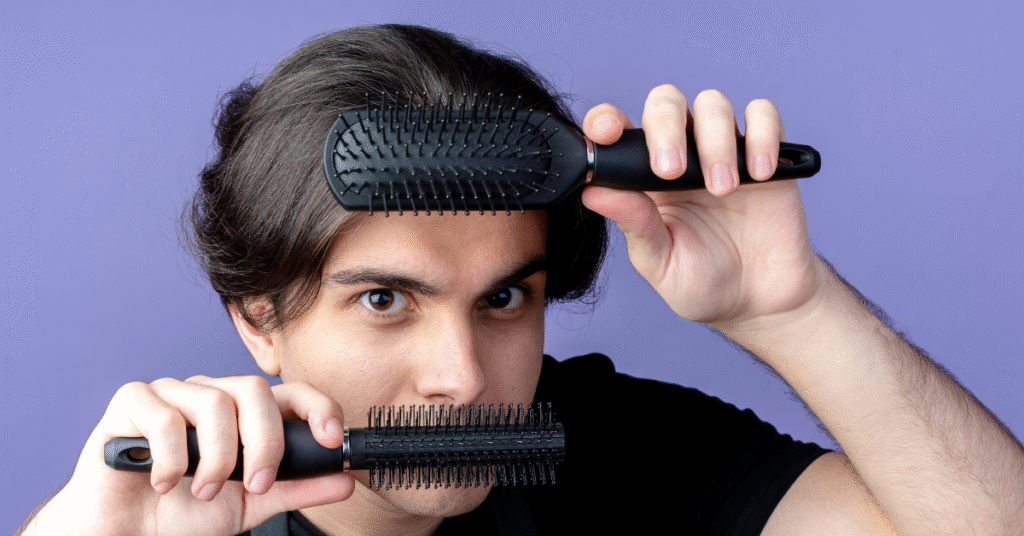
A round brush is a professional tool for creating serious volume. As you blow dry, use the round brush to lift hair up and away from your scalp at the roots.
Wrap sections of hair around the brush, apply heat, then hold for a few seconds before releasing. This creates tension that lifts hair and sets it in a voluminous position as it cools.
Focus on the roots and crown area where you need the most volume. For men with short to medium-length hair, a small to medium-sized round brush works best.
This technique takes practice but delivers salon-quality volume once you master it. The combination of heat, tension, and lift creates volume that lasts much longer than finger styling alone.
Backcombing Without Damaging Your Hair
Backcombing, also called teasing, involves gently combing hair toward the scalp to create volume. This technique should be used carefully on thin hair to avoid breakage.
Take small sections of hair and use a fine-tooth comb to gently push hair toward the scalp, creating a cushion of tangled hair at the roots. Do this underneath visible layers so it’s hidden.
Use a light hand and never rip through tangles aggressively. Backcombing is best saved for special occasions rather than daily use, as repeated teasing can damage delicate, thin hair.
To remove backcombing at the end of the day, never brush it out dry. Instead, apply conditioner in the shower and gently work out tangles with your fingers before rinsing.
Changing Your Hair Part for Instant Height
Your hair naturally falls flat in the direction it’s been trained to lie. Changing your part is a simple trick that creates instant volume without any products or tools.
If you normally part your hair on the left, switch to parting it on the right. Your hair will naturally want to fall toward its usual position, creating lift as it fights against the new direction.
This technique works because hair has memory based on how you’ve worn it. Breaking that pattern forces hair to stand up rather than lying in its usual flat position.
Even switching from a side part to a center part can make a noticeable difference. Experiment with different part positions to see which creates the most natural-looking volume for your face shape.
Haircuts That Naturally Add Volume to Thin Hair Men
The right haircut is one of the most important factors in making thin hair look fuller and more voluminous.
Best Short Hairstyles for Thin Hair
Short hairstyles are generally the most flattering for thin hair because they prevent the weight of long hair from pulling down and flattening your style.
A textured crop with short sides and slightly longer top creates the illusion of thickness and makes styling easier. The crew cut is another classic option that works well for thinning hair, especially if you keep some length on top.
The buzz cut is the ultimate solution for very thin hair, as it creates a uniform appearance that doesn’t show thinning as obviously. Short styles also require less product, which helps avoid weighing down thin hair.
Ask your barber for cuts that add texture rather than clean, blunt lines, as texture creates visual interest that makes hair appear fuller.
Layered Cuts That Create Volume
Layering removes weight from your hair, allowing it to stand up more easily and creating natural movement. Layers work by cutting hair at different lengths, which prevents all the weight from pulling in one direction.
For men with thin hair, subtle layers throughout the top add volume without making hair look choppy or thin at the ends. The key is keeping layers relatively close together rather than creating dramatic length differences.
Too many layers or layers that are too far apart can actually make thin hair look thinner by creating visible gaps. Work with an experienced stylist who understands how to layer thin hair properly.
Proper layering can make a dramatic difference in how full and healthy your hair looks, even without changing anything else about your routine.
Textured Cuts for Fine Hair
Textured cuts use cutting techniques that create an intentionally uneven, piece-y look. This style is perfect for fine hair because it prevents hair from clumping together and lying flat.
Point cutting and razor cutting are two techniques barbers use to add texture. These methods create slightly jagged ends that separate naturally rather than lying smooth and flat.
The result is hair that appears thicker and has more natural movement. Textured cuts also work better with volumizing products because the uneven ends grip product better.
This style requires regular maintenance every 4-6 weeks to maintain the textured effect and prevent hair from growing long enough to fall flat.
What to Avoid When Trying to Add Volume to Thin Hair
Knowing what not to do is just as important as knowing the right techniques and products to use.
Heavy Styling Products That Flatten Hair
Heavy products like strong-hold gels, pomades, waxes, and oils are the enemy of volume for thin hair. These products weigh down each strand, causing hair to lie flat against your scalp.
They also tend to make hair look greasy and separated, drawing attention to thinning areas rather than creating the appearance of fullness.
If you need hold, choose lightweight alternatives like mousses, foams, light-hold creams, and powders. Always start with less product than you think you need.
You can always add more, but removing excess product requires washing your hair, which disrupts your style and wastes time.
Heat Damage and Chemical Treatments
While heat styling is useful for creating volume, excessive heat damages the hair cuticle and causes breakage. This makes thin hair even thinner over time.
Always use heat protection products and keep your blow dryer moving rather than concentrating heat in one spot. Avoid extremely high heat settings when possible.
Chemical treatments like perms, relaxers, and bleaching can severely damage thin hair. These processes alter the hair’s structure, making it weaker and more prone to breakage.
If you must use chemicals, work with a professional who has experience with thin, fine hair and can minimize damage.
Long Hairstyles That Make Hair Look Thinner
Length and weight work against you when you have thin hair. The longer your hair grows, the more it weighs, pulling down from the roots and eliminating volume.
Long, thin hair also shows scalp more obviously and is harder to style effectively. The ends of long, thin hair often look wispy and damaged, drawing attention to lack of thickness.
For most men with thin hair, keeping length at medium or short looks fuller and healthier. If you prefer longer hair, ensure you’re getting regular trims to remove damaged ends and maintain shape.
Adding layers to longer styles helps remove weight while maintaining length, but truly long hair rarely looks its best on men with thin hair.
Can You Get Permanent Hair Volume? (Real Options)
While daily styling creates temporary volume, some men want longer-lasting or permanent solutions for thin hair.
Keratin, Perms, and Long-Term Volumizing Methods
Keratin treatments smooth the hair cuticle and reduce frizz but generally don’t add volume. In fact, they often make hair lie flatter and sleeker, which works against volume goals.
Perms can add volume by creating curl patterns that lift hair away from the scalp. Modern perms are gentler than the harsh chemicals used in the past, but they still involve chemical processing.
A volume perm or root perm adds curl just at the roots to create lift without curling the entire hair shaft. This can be effective for men with very straight, fine hair that won’t hold volume otherwise.
However, perms require maintenance as hair grows out and can cause damage if not done properly. Consult with an experienced stylist before considering any chemical volumizing treatment.
FDA-Backed Hair Loss Treatments (Finasteride & Minoxidil)
If your thin hair is caused by male pattern baldness rather than naturally fine hair, medical treatments can help. Minoxidil is a topical solution applied directly to the scalp that promotes hair growth.
Finasteride is an oral medication that blocks the hormone responsible for male pattern hair loss. Both treatments are FDA-approved and have been shown to be effective in clinical studies.
These medications work best when started early, before significant hair loss has occurred. They require ongoing use to maintain results, as stopping the medication causes any regrown hair to fall out.
Combining these treatments with the volumizing techniques in this guide maximizes your results, as you’re both treating the underlying cause of thinning and making the most of the hair you have.
When to See a Dermatologist
If you’re experiencing sudden hair loss, patchy baldness, or hair loss accompanied by scalp problems like itching or redness, see a dermatologist. These symptoms could indicate medical conditions that need professional treatment.
A dermatologist can determine whether your thin hair is genetic, caused by a medical condition, or related to nutritional deficiencies or stress. They can prescribe medical treatments if appropriate.
Don’t wait until significant hair loss has occurred to seek help. Early intervention provides the best results for treating hair loss conditions.
A dermatologist can also provide personalized advice on hair care routines and products that are best for your specific situation.
Final Takeaway on How to Add Volume to Thin Hair Men
Adding volume to thin hair is entirely achievable with the right combination of techniques, products, and consistent habits.
Most Effective Daily Habits
The most impactful daily habits for volume include washing with lukewarm water and volumizing shampoo, conditioning only the ends, and applying lightweight styling products.
Blow drying upside down or with a round brush creates immediate lift that lasts throughout the day. Using texture powder or sea salt spray adds grip and separation that prevents hair from lying flat.
Protecting your hair from heat damage with proper products ensures your hair stays healthy enough to maintain volume. Remember that consistency matters more than perfection.
Even incorporating just two or three of these techniques into your daily routine will create noticeable improvements in how full and thick your hair appears.
Quick Fixes vs. Long-Term Solutions
For immediate volume before an important event, focus on styling techniques like blow drying upside down, using texture powder, and changing your hair part. These create instant results with minimal effort.
For long-term improvement in hair volume and overall hair health, focus on proper washing routines, using appropriate products consistently, getting regular haircuts, and potentially considering medical treatments if hair loss is a concern.
The best approach combines both quick fixes for day-to-day styling and long-term strategies that improve your hair’s health and natural volume over time.
Remember that thin hair doesn’t mean you’re destined for flat, lifeless styles. With the techniques and products covered in this guide, you can create fuller, more voluminous hair that boosts your confidence and complements your personal style. Start with one or two techniques that seem most manageable, then gradually incorporate more as they become habits. Your hair will thank you for the attention and care.